
CrazyPaving
In 1997 you were told there was no career path and to lay your own. You did. Here is where it went.
All images (apart from Magnus) are AI generated. But you knew that already.

In your twenties you were told the job for life had gone. No career path. Lay your own.
You did. Thirty years of it.
Now your generation runs most of Britain’s companies, and you got there by a route you were told did not exist.
The path is changing again. The top is short. The next job is scarce. The work itself is being remade, and we could find nobody following what happens to leaders after they leave.
What happens to the people who built their own path when the path runs out?

Paul Fussell, an American academic, had used the term Category X in 1983 for people who wanted out of the race for status and money. Douglas Coupland borrowed it for his 1991 novel. Three twenty-somethings quit pointless jobs and take McJobs in Palm Springs.
Fussell, Class, 1983. Coupland, Generation X: Tales for an Accelerated Culture, 1991.

The same three, in a lift. In 1995 Coupland wrote that X was over.
The story was that Generation X wanted out.
Coupland, “Generation X’d”, Details, June 1995.

The IPD asked 1,000 employees about their jobs. Nearly half saw their job as long term. Another 21% saw it as the way up inside the same firm. Only 16% called themselves portfolio workers.
IPD survey of 1,000 employees, reported in The Independent, 27 October 1995.

The reserved bays outside a head office.
They expected to stay and climb to a space like this. The firms they had joined were already taking the rungs out.

IBM stopped guaranteeing its graduate trainees a job in 1990. By 1992, 74% of 150 British companies had already widened the spans of control over their middle managers. By March 1994, 64% of 123 of Britain’s largest organisations had delayered. The Institute for Employment Studies reported it in 1995, by which time it was over.
BIM survey of 150 companies, 1992, and Strategic People survey of 123 of the top 500 UK organisations, March 1994, both reported in Kettley, Is Flatter Better? Delayering the Management Hierarchy, Institute for Employment Studies, 1995.

The same floor, thirty years later.
The career they wanted was being taken apart in the years they arrived to start it.

“There is no such thing as a career path – it’s crazy paving and you lay it yourself.”
Robin Linnecar of The Change Partnership, quoted in The Independent, 1997.

That was the deal. No path. No guarantee. Build it yourself. What did you build?

12.7% of 1992 graduates were out of work six months on. For 1997 graduates it was 6%. Services were three quarters of employee jobs. A new government, a growing economy, and the cohort was aged 19 to 37.
AGCAS, What Do Graduates Do?, reported in The Independent, 14 December 1994. HESA First Destinations, reported in Times Higher Education, 3 July 1998. Different surveys, both about six months after graduation. ONS employee jobs, 1997.

The same street. The party is over.
For a few years the bargain paid off. Jobs came back, and laying your own path felt like freedom, not a sentence.

Twenty-nine, at the flipchart. The only one standing, in a room of men in their fifties.

2011: FTSE 350 chief executives born 1966 to 1980. 2025: chief executives aged 45 to 65 at Britain’s 150 largest listed companies.
In 2011 the younger part of this generation was barely in the room. By 2025 their age group ran it.
Thorburn McAlister and University of Southampton, FTSE 350 Board Review 2012. Spencer Stuart, UK Board Index 2025.

Fifty CVs to fifty firms. Keep moving, was the advice. Nobody stays anywhere now.

Sitting FTSE 100 chief executives had been at their company for nine years on average before they got the job.
The advice was to keep moving. The ones who reached the top stayed put for nine years to get there.
Heidrick & Struggles, Route to the Top 2026.

Day one. A visitor badge, a plastic cup, and thirty years to go.

The average FTSE 100 chief executive was appointed at 52. Across Europe’s large companies, the average departing chief executive is 59.
Thirty years getting there. Appointed at about 52, departing at about 59. The window at the top is smaller than the climb. How many years have you had?
Heidrick & Struggles, Route to the Top 2026. Spencer Stuart, CEO Transitions in Europe 2025; the exit age is European.

Friday. Six in the lift, out at five on the dot.

Of the FTSE 350 chief executives appointed in 2024, 45% followed an unexpected or sudden departure. Six of 12 in the FTSE 100. Nine of 21 in the FTSE 250. It is not a dismissal rate.
Nearly half the chief executive changes in 2024 followed an unexpected or sudden departure.
25x25, Nomination Committee Effectiveness on CEO Succession Planning, August 2025.

A mattress on the floor, a phone on a long cord, and nobody depending on you.

Sandwich carers in the UK, caring for a child and for a sick, disabled or older adult at once. Half are aged 45 to 64. The share of 25 to 34 year olds living with their parents has risen from 13% to 18%.
The years at the top are the years your parents need looking after and your children are still at home.
ONS, Sandwich carers, UK, November 2024. Institute for Fiscal Studies, January 2025.

Asleep in your boots on someone else’s sofa. Fine by nine.

We could find no peer-reviewed British study of the health, sleep or marriages of the people who run British companies. The nearest is French: 361 business leaders, average age 45, 67% reporting poor sleep.
We know what bosses are paid. We could find no British research that measures what the job does to them.
Bourlois et al., PLOS Global Public Health, 2026.
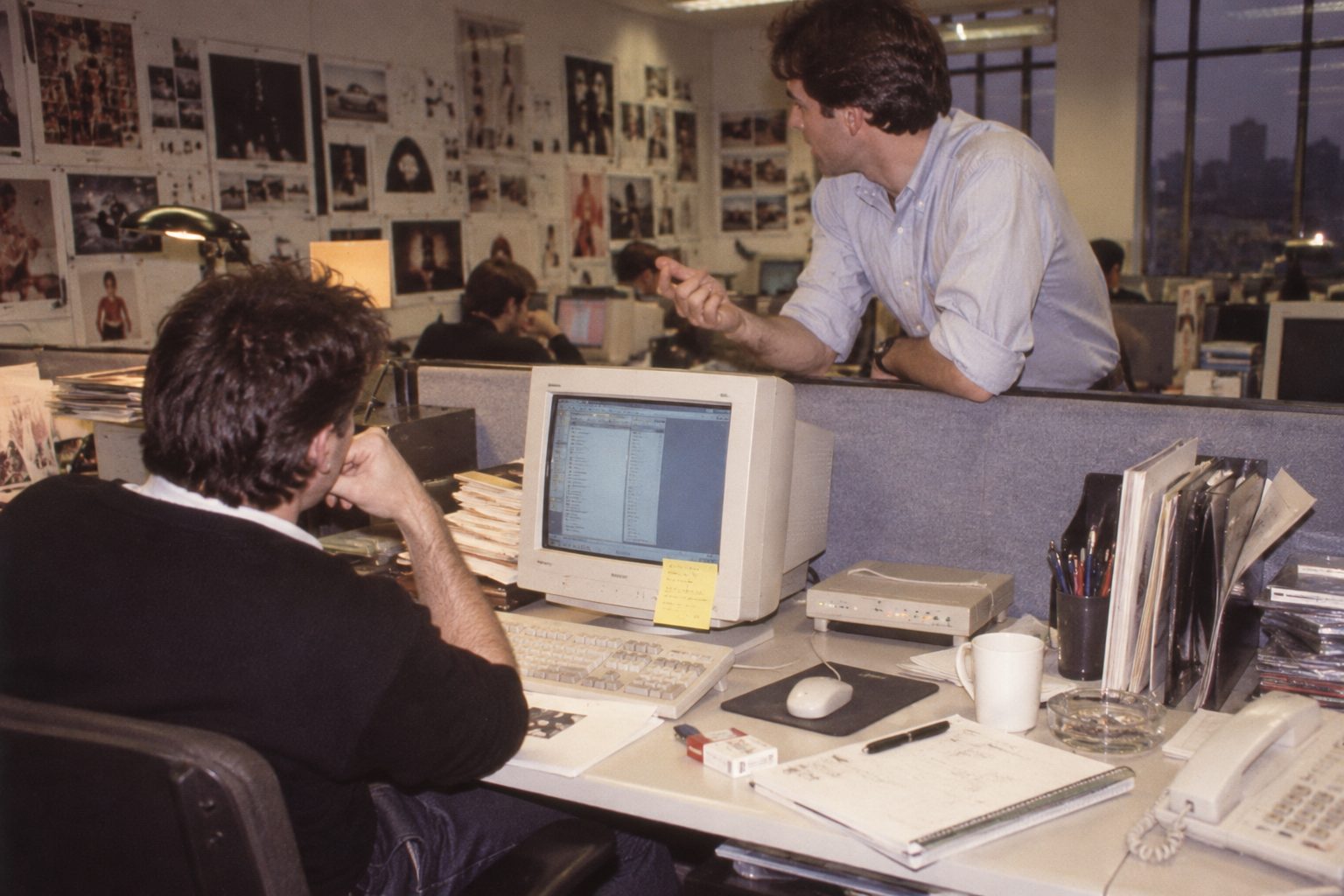
In April 1994 Tomorrow’s World showed viewers electronic mail and shopping by computer. In September Cyberia, one of the first internet cafés anywhere, opened on Whitfield Street. It looked like the biggest change work would ever see.
BBC, Tomorrow’s World, 29 April 1994. Cybersalon, 1994.

AI is everywhere.
The internet arrived as this generation entered work. AI is arriving as it reaches the top and starts thinking about what comes after.

Every line of the week filled in. Retirement was something that happened to other people.

State pension age for everyone born between March 1961 and April 1977; 68 for those born on or after 6 April 1978. Of adults aged 40 to 75 not yet retired, 72% expect to retire later than they would like.
For everyone in this generation the state pension comes after 65. Most who have not yet retired expect to work longer than they would like.
Pensions Acts 2007 and 2014. DWP, Planning and Preparing for Later Life 2024.

The first payslip. The pension box was a mystery and it did not matter yet.

The share of 55 to 64 year olds in England with any final-salary pension, fifteen years apart. Among people with a defined contribution pension, someone born in the early 1960s is projected to retire with a median £74,000. Someone born in the early 1970s, £102,000.
Fewer people in their late fifties and early sixties have a guaranteed pension than fifteen years ago. Like the career, more of the pension is theirs to build.
Institute for Fiscal Studies, April 2025. English Longitudinal Study of Ageing; pots in 2024 prices.

The queue. Everyone in it is getting in.

61% of sitting chief executives say they are considering another chief executive role. Seven in a hundred former chief executives have taken one. Different groups, so not a conversion rate.
Most sitting CEOs would consider another top job. Few ex-CEOs have taken one.
Spencer Stuart, CEO Transitions: How to Avoid a Bumpy Exit, 2025. Survey of 1,000+ current and former CEOs in Asia, Europe and North America.

A field at dawn. Nobody has thought about Monday.

In the year to April 2025, Britain’s 150 largest listed companies appointed fifteen chairs and nine chief executives.
“Very few equivalent top seats open each year. What is offered instead is fractional, advisory and portfolio work. In my experience it is the Machine in looser clothing.”
Magnus Wood
Spencer Stuart, UK Board Index 2025.

She went travelling. Confident she could get a job when she decided to come back.

People between 50 and state pension age who are interested in work, or looking for it, and do not have it. October to December 2025, the highest since 2020. Not a senior-executive statistic. It is the labour market they re-enter.
A senior title does not make age disappear when the title does.
Centre for Ageing Better, The NETER employment crisis, 7 September 2026.

A photograph is missing from the album. Nobody knows where it went.

We could find no British study of what departing FTSE chief executives go on to do. Who gets another role, who builds a portfolio, who stops, who disappears.
We know how old they were when they got the job. We could find nobody tracking what happened to them after they left it.
Checked against Spencer Stuart, Heidrick & Struggles, Russell Reynolds, 25x25 and BoardEx, September 2026.

You have less time at the top than you think.
If this is not the time to lay a path of your own, there is not going to be one.
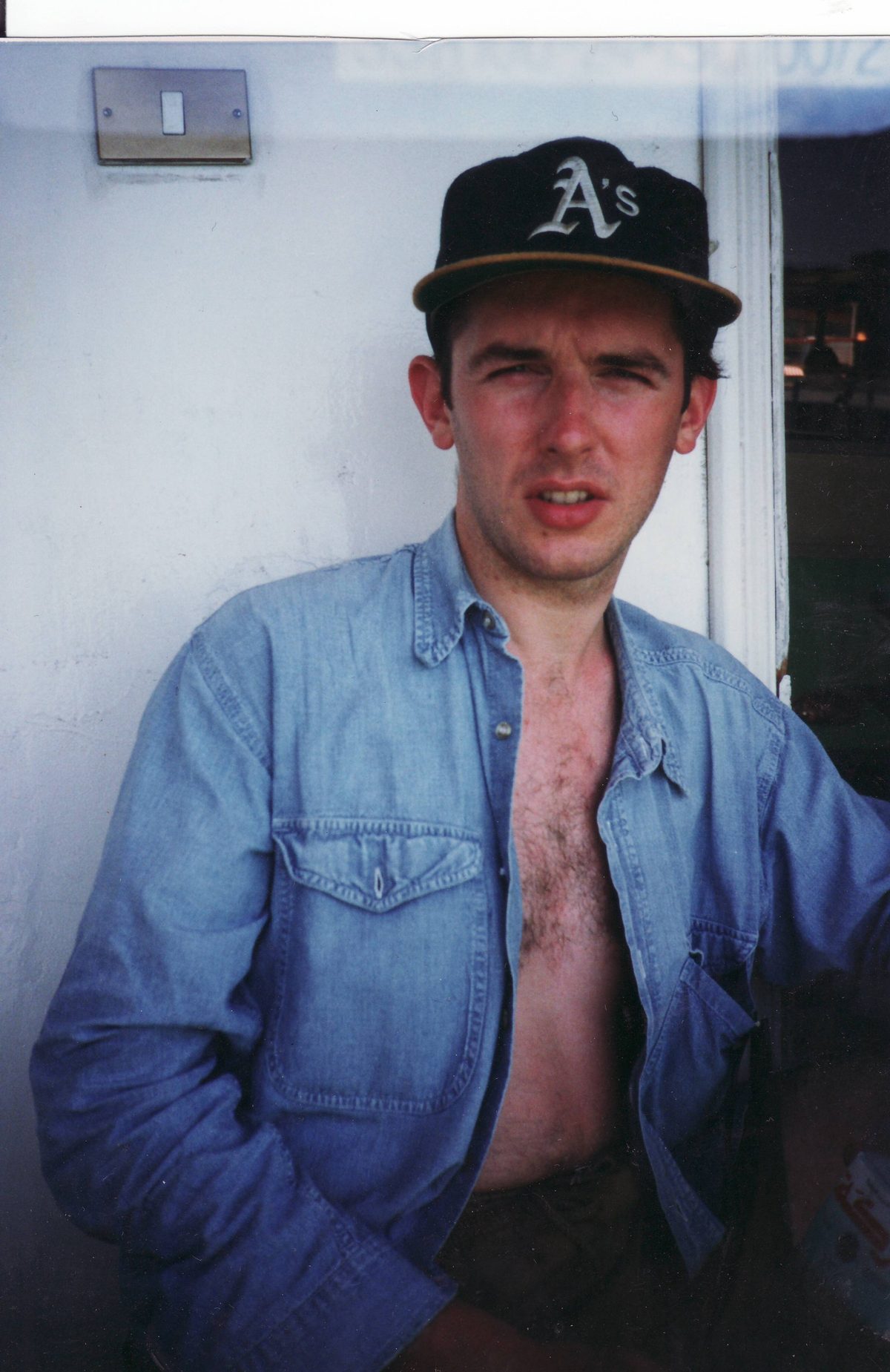
Three times at the top. Left three times, not always when I chose.Magnus Wood
What did you expect the top to be, and what is it?
Your answer goes on the record at Seen in the Apex.
Someone came to mind while you were reading. Send it to them.
Take your year with you.
Seen in the Apex, where this is going. Wild Leadership, where it comes from.
Sources
- Paul Fussell, Class: A Guide Through the American Status System, 1983. Douglas Coupland, Generation X: Tales for an Accelerated Culture, 1991; “Generation X’d”, Details, June 1995.
- Barrie Clement, “Employees reluctant to give up idea of job for life”, The Independent, 27 October 1995 (IPD survey of 1,000 employees).
- Polly Kettley, Is Flatter Better? Delayering the Management Hierarchy, Institute for Employment Studies, 1995. Nigel Cope, “Never knowingly undervalued”, The Independent, 15 June 1995.
- Maureen O’Connor, “Degrees that almost guarantee jobs”, The Independent, 1997.
- BBC, Tomorrow’s World, 29 April 1994. Cybersalon, 1994: From Cyberia Café to Digital London.
- AGCAS, What Do Graduates Do?, reported in The Independent, 14 December 1994. HESA First Destinations, reported in Times Higher Education, 3 July 1998. ONS employee jobs, via Bank of England Quarterly Bulletin, November 1998.
- Thorburn McAlister and University of Southampton, FTSE 350 Board Review 2012. Spencer Stuart, 2025 UK Board Index.
- Heidrick & Struggles, Route to the Top 2026. Spencer Stuart, CEO Transitions in Europe 2025.
- 25x25, Nomination Committee Effectiveness on CEO Succession Planning, August 2025.
- ONS, Sandwich carers, UK: January 2021 to May 2023, November 2024. Institute for Fiscal Studies, Hotel of Mum and Dad?, January 2025.
- Bourlois et al., PLOS Global Public Health, 2026.
- Pensions Acts 2007 and 2014. DWP, Planning and Preparing for Later Life 2024.
- Institute for Fiscal Studies, Individuals’ challenges managing pensions through retirement, April 2025.
- Spencer Stuart, CEO Transitions: How to Avoid a Bumpy Exit, 2025.
- Centre for Ageing Better, The NETER employment crisis, 7 September 2026.
- Gregory-Smith and Main, Scottish Journal of Political Economy, 2016.
All images (apart from Magnus) are AI generated. But you knew that already.
Crazy Paving, a Wild Leadership report by Magnus Wood, September 2026.